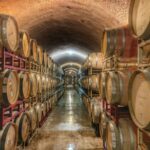
How did Provence become the cradle of rosé?

From the song of the cicadas to the sweet scent of lavender fields, Provence has fascinated lovers of the good life for centuries. Yet behind this picture postcard image lies an age-old savoir-faire: rosé wine. Rarely has a region so successfully combined an idyllic landscape with a winegrowing passion steeped in history. Let's discover this emblematic wine-growing region, which has become the undisputed cradle of a wine that can no longer be ignored.
A history of conquest and daring
It's often said that Provence saw the birth of France's first rosé wine long before any other color, and as early as the arrival of the Greeks on the Mediterranean coast in the VIᵉ century BC. At the time, wine color tended towards lighter hues, due to the lack of elaborate processes for extracting sufficient pigments from red wines. Over the centuries, vine cultivation took root in these limestone soils and sun-drenched hillsides, giving rise to a wide range of grape varieties emblematic of Provencal wine: Grenache, Cinsault, Syrah or Mourvèdre.
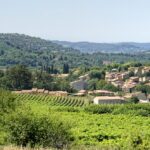
Since the Middle Ages, great estates and châteaux have flourished in the region, responding to the quest of nobles and monks for sublime nectars. Some of them, which today have become veritable institutions, are still present and perpetuate the tradition of rosé wine production. The Provencal landscape has thus been transformed into a living vineyard, criss-crossed by rows of carefully tended vines, where the love of terroir can be seen as far as the eye can see.
The secrets of fermentation and the quest for quality
The charm of rosé wine lies not only in its delicate hue, but also in its subtle aromas. To grasp the full dimension of Provençal wine, you need to look at the fermentation process and the almost scientific precision of the winemakers. Unlike red wines, grape juice macerates for a short time with the skins, resulting in the pale color so characteristic of the region.
Today, wine quality is further enhanced by the requirements of the AOC (Appellations d'Origine Contrôlée), reinforcing Provence's reputation on the international stage. Regular controls, rigorous traceability and a constant quest for excellence guarantee rosé wines that combine freshness, elegance and aromatic complexity. The wine's aromas often oscillate between notes of red fruit, citrus and sometimes even a hint of minerality provided by the limestone soils.
To achieve such delicacy, the winemakers rely on :
- Meticulous selection of grape varieties: choice of plots, manual harvesting and use of perfectly ripe grapes to preserve their finesse.
- Precise vinification: temperature control during maceration and fermentation to bring out the full freshness of the aromas.
It's this quest for perfection that has elevated Provence to an international benchmark, making rosé wine the emblem of an art of living.
The rise of a culture and the magic of Provencal castles
In Provence, beyond farming, there's a real passion for hospitality and sharing around the table. Each château has its own history, sometimes centuries old, which intertwines with the history of wine. On-site tastings invite you to discover not only flavors, but also an enchanting setting: old stones, century-old olive trees and flower-filled pergolas.
A tour of the region plunges you into a story where tradition and modernity intertwine. The new generations of winemakers, while respecting the heritage of their elders, are injecting creative energy: bold design, careful marketing and festive events to promote their crus. Appellations d'origine contrôlée (AOC) such as Côtes de Provence, Coteaux d'Aix-en-Provence or Bandol bear witness to the diversity of terroirs and microclimates, each offering its own unique character.
An art of living in its own right
If there's one thing Provence has exported to the four corners of the world, it's its enchanting art de vivre, with its emphasis on conviviality and gastronomy. Pairing a local dish, such as anchoïade, bouillabaisse or tian de légumes, with a chilled rosé wine is an experience of simple yet memorable elegance. The wine region is a symbol of refined wine production, where every moment of sharing is tinged with smiles and sunshine.
Of particular note are :
- The influence of the Mediterranean climate: generous sunshine and sea breezes temper the heat, ensuring perfect ripening of the grapes.
- Rich terroirs: soils as varied as schist, limestone and clay, giving Provence's rosé wines an incredible aromatic palette.
This fusion of an exceptional natural setting and a demanding winegrowing culture creates a singular charm, transforming Provence into a setting where refinement meets simplicity.
A legacy that continues
Today, tasting a Provençal rosé wine is like drinking a concentrate of history and terroir. You can feel the passion of the winegrowers who, for generations, have shaped the vines with respect and creativity. The AOC label ensures the continuity of this heritage, while promoting Provence far beyond France's borders.
More than just a drink, rosé wine from Provence embodies a warm and sophisticated art of living, where the beauty of a landscape, the magic of an ancient château and the balance between tradition and modernity come together around a glass. A moment of tasting is a moment stolen from time, a nod to history, an invitation to savor life to the full. And this is undoubtedly the real secret of Provence: combining the authenticity of age-old know-how with the elegance of an ever more promising present.

 Comment la Provence est devenue le berceau du rosé ?Par Christian Ott, le 25 mars 2025
 Gestion de la biodiversité dans les vignobles provençauxPar Christian Ott, le 22 mars 2025
- Les domaines incontournables de la ProvencePar Christian Ott, le 17 mars 2025