The influence of the sea on Provence wines: myth or reality?

Provence has a unique charm, where the sea horizon often merges with rolling hillsides. For centuries, the Mediterranean has played an almost mystical role in the creation of exceptional wines. But to what extent does this sea really shape the character of a red or white wine? And above all, how are current climate changes influencing a vineyard already famous throughout France?
The call of the sea: an ancestral myth?
The idea that the sea breeze permeates every Provençal vine is not new. It is said that the Greeks, landing near Marseille, brought a founding viticultural code with them, planting the first vines in soil bathed in sea spray. Throughout history, new grape varieties have appeared, generally from other regions, giving rise to a mosaic of tastes and traditions. In the famous Bandol appellation, for example, the reputation of its red and white wines was long based on the idea that proximity to the sea guaranteed inimitable freshness.
Yet this purely maritime vision reflects only part of the reality. It's true that humid air currents from the open sea can mitigate summer heat, and that sea spray provides minerals that influence wine production. But it would be simplistic to think that the quality of a wine depends solely on this parameter. Local winemakers point out that other factors, such as limestone soils, the region's overall climate and cellar work, are just as decisive.
Contrasting terroirs, from Saint-Tropez to the hinterland
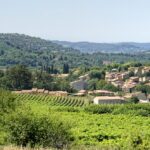
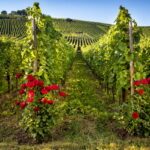
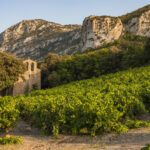
From the tip of Saint-Tropez to the heights of the hinterland, the vineyards of Provence offer a multitude of microclimates. While some vineyards border the Mediterranean, others, such as historic châteaux and hilltop villages, benefit from higher altitudes that protect them from the heat. A stroll along the hillsides reveals a wide variety of soils: clay-limestone, sandy, even schist. Each gives the wine its own distinctive style.
On the Alône terroir, nestled at altitude, we discover an environment rather atypical of Provence:
- A regulating microclimate: thanks to its modest altitude and sandy soil, the vines benefit from natural ventilation. As a result, the plant is better able to defend itself against disease and regulate its water supply, despite drought conditions.
- Carefully selected grape varieties: to cope with the region's sometimes harsh conditions, winemakers opt for varieties that are more resistant to heat, while preserving the personality of Provencal wine.
This geographical diversity explains why some crus exude a maritime freshness, while others reveal an almost alpine vivacity. Neighboring appellations, such as those around Marseille or Saint-Maximin, blend marine and inland influences, reflecting the region's rich cultural heritage.
Climate challenges and the search for balance
As the climate warms up and the seasons change, many winegrowers in Provence find themselves confronted not only with drought, but also with more frequent outbreaks of disease in their plots. This situation demands constant adaptation. To cope, production techniques are evolving: lower yields in favor of quality, better water management and the use of more resistant rootstocks.
Thanks to the microclimate at altitude, the vines at Domaine d'Alône enjoy a welcome respite from excessive heat. The sandy terroir plays a decisive role, preventing excessive water accumulation while limiting water stress. The resulting wine gains in balance, setting it apart from the rest of Provence.
A few guidelines for adapting to new challenges
Before giving in to the idea that the sea is the sole savior of southern wines, the professionals insist on various areas of work:
- Selecting more adapted grape varieties: beyond the traditional rosé, the adoption of new resistant varieties helps preserve the taste qualities of reds and whites, even during heatwaves.
- Revising vine planting: planting on ventilated hillsides or at higher altitudes can cushion the effect of heat peaks.
At the same time, the whole of winegrowing France is engaged in a far-reaching rethink. The climate changed, but the passion for wine remained, driving each generation of winemakers to reinvent their art, sometimes by breaking free from the overly rigid framework of certain established codes.
A heritage to be cultivated over the long term
The lure of the sea, however romantic, is not the sole reason for the success of Provence wines. This region draws its strength from its history, its multiple terroirs and the determination of its craftsmen, from the first Greek trading posts in Marseille to the hills dotted with chateaux. In the face of climatic upheavals, winegrowers are proving that well-chosen soil, careful vine management and a touch of creativity are still the essential ingredients for producing an assertive red, a harmonious rosé or an elegant white.
In the end, whether it's the sea breeze caressing a coastal estate or the crisp air of a high plateau, Provence has a thousand faces. Far from being a mere myth, the influence of the sea is part of a much broader set of natural and human factors. And it is undoubtedly this delicate alchemy, woven into the fabric of each passing century, that makes these wines a living treasure, always ready to reinvent itself to surprise and delight our senses.
 L’irrigation dans les vignobles provençaux : faut-il en avoir peur ?Par Christian Ott, le 18 août 2025
- Comment adapter la viticulture au réchauffement climatique en Provence ?Par Christian Ott, le 3 septembre 2025
- Les cépages emblématiques de la Provence et leur adaptation aux terroirsPar Christian Ott, le 31 mars 2025
- Les particularités des terroirs provençaux : entre calcaire et argilo-silicieuxPar Christian Ott, le 4 mars 2025
- Le travail du sol en climat méditerranéen : défis et innovationsPar Christian Ott, le 20 octobre 2025
- Réduction des traitements phytosanitaires en Provence : quelles alternatives ?Par Christian Ott, le 7 juillet 2025
- Le rôle du mistral dans la viticulture provençalePar Christian Ott, le 8 décembre 2025
- La cohabitation entre viticulture et faune sauvage dans les vignobles provençauxPar Christian Ott, le 10 avril 2025
- Les couverts végétaux : une solution pour préserver les sols en climat chaudPar Christian Ott, le 22 avril 2025
- Biodynamie en Provence : quels domaines ont sauté le pas ?Par Christian Ott, le 1 mars 2025