Harvesting in Provence: methods and traditions

For generations, the harvest in Provence has held a special fascination for wine lovers and curious travelers alike. Over the years, the region has forged a reputation around its rosé wines, the beauty of its vines and the expertise of its winemakers. Yet behind these postcard images lie more technical realities and traditions worth exploring. In this article, we look at the harvesting methods, technological developments and cultural heritage that make Provençal viticulture so unique.
A terroir shaped by history and climate
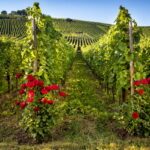
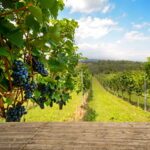
Situated between sea and mountains, Provence enjoys a warm, sunny climate, ideal for growing grapes. The plots, sometimes terraced, are home to a variety of grape varieties, including Grenache, Syrah and Cinsault, which are particularly prized for making rosés. On this land bathed in light, the work of the winegrowers is both demanding and rewarding: the vines require constant attention, from winter pruning to the harvest in late summer or early autumn.
Mechanical harvesting, a majority practice
Today, almost 90% of Provençal vineyards opt for mechanical harvesting. This method, which relies on the use of harvesting machines, enables grapes to be picked quickly, while reducing the amount of labor required. There are several reasons for this trend:
- Efficiency: mechanical harvesting can cover vast areas in record time, which is invaluable when the weather is capricious.
- Profitability: reducing the number of workers needed on the estate represents a financial advantage for many wineries.
However, this more modern approach is not without its challenges. Machines have to be fine-tuned to avoid damaging bunches or picking unwanted elements (leaves, twigs). Despite these precautions, the overall quality of the resulting wine remains high, thanks to the rigor of the winemakers who systematically sort the grapes after harvesting to ensure a level of excellence.
The special case of Bandol: the manual tradition
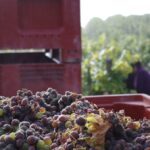
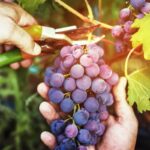
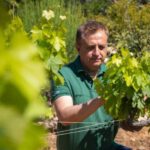
In the Bandol appellation, located on the Mediterranean coast, harvesting remains largely manual. Winegrowers perpetuate an ancient ritual of hand-picking grapes, carefully arranged in small crates. Châteaux and estates that opt for this method rely on the meticulous selection of each bunch and the preservation of the grapes' integrity. This know-how is part of a long-standing winemaking tradition, the aim of which is to guarantee the high quality and distinctive character of this geographical area.
Harvesting by hand strengthens the ties between the land and its people: work in the rows of vines is carried out to the rhythm of nature, in an often convivial atmosphere, where sharing and passing on knowledge are at the heart of the experience. Bandol rosés, renowned for their finesse and balance, derive part of their renown from this attachment to ancient practices.
A balance between tradition and modernity
Beyond the idyllic image of Provence, Provencal viticulture has evolved. Today's wineries are equipped with state-of-the-art technology, allowing perfect control of fermentation temperatures and precise monitoring of the transformation of must into wine. Winegrowers keep abreast of new processes, adapting their winemaking methods to offer ever higher-quality cuvées.
Yet attachment to the terroir and its customs remains essential. Some estates, like ours, are committed to preserving manual practices for certain parcels, or even for specific cuvées. It's all about striking a subtle balance between contemporary efficiency and respect for an age-old heritage.
Economic and ecological considerations
While mechanization promotes productivity, it also raises questions about the ecological impact and carbon footprint generated by the passage of machinery through the rows of vines. Winegrowers must therefore constantly arbitrate between optimizing their harvest, preserving the soil and reducing CO₂ emissions.
- Innovation: the development of machine models that consume less energy and make less noise is a promising step forward.
- Adaptation: in certain sloping areas, manual harvesting is still almost compulsory, as machines cannot easily operate on steep terrain.
Towards new horizons for Provence winegrowing
Harvesting in Provence, whether mechanical or manual, is a story of passion and adaptation. Aware of their heritage, the region's winegrowers embrace modernity without abandoning the profound identity of their wines. This duality is reflected in the rosé, red and white cuvées that make Provence shine beyond France's borders.
Behind each estate, each harvest, each grape, lies a common desire: to offer quality wines that respect the vines and the people, while blazing new trails for the future. It's not a question of choosing between tradition and technology, but of marrying these two approaches to preserve the unique richness of Provence rosés and the reputation of this exceptional wine-growing region.
 Les couverts végétaux : une solution pour préserver les sols en climat chaudPar Christian Ott, le 22 avril 2025
- Influence de la mer sur les vins de Provence : mythe ou réalité ?Par Christian Ott, le 26 mars 2025
- Vendanges en Provence : méthodes et traditionsPar Christian Ott, le 11 mars 2025
- Réduction des traitements phytosanitaires en Provence : quelles alternatives ?Par Christian Ott, le 7 juillet 2025
- Le rôle du mistral dans la viticulture provençalePar Christian Ott, le 8 décembre 2025
- L’irrigation dans les vignobles provençaux : faut-il en avoir peur ?Par Christian Ott, le 18 août 2025
- Les particularités des terroirs provençaux : entre calcaire et argilo-silicieuxPar Christian Ott, le 4 mars 2025
- La cohabitation entre viticulture et faune sauvage dans les vignobles provençauxPar Christian Ott, le 10 avril 2025
- Biodynamie en Provence : quels domaines ont sauté le pas ?Par Christian Ott, le 1 mars 2025
- Comment adapter la viticulture au réchauffement climatique en Provence ?Par Christian Ott, le 3 septembre 2025